The Merry Holiday Font for Bold Web Design
Using The Merry Holiday Display Font for High-Impact Hero Sections
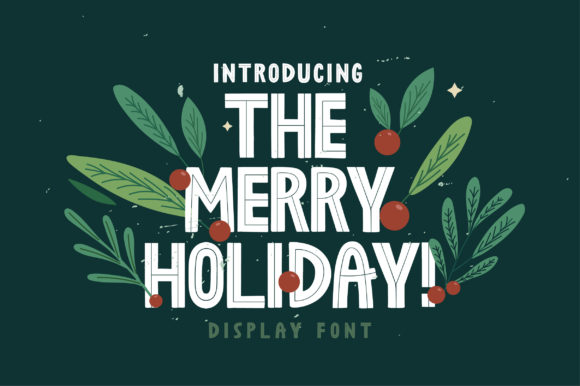
The Merry Holiday is a bold, unique handwritten display font that serves as an exceptional anchor for website hero sections where immediate visual engagement is critical. When designing landing pages or homepages, the primary goal is to capture attention within seconds, and this typeface delivers the necessary weight and personality to stop the scroll. Unlike standard sans serif fonts that can sometimes feel sterile in creative contexts, The Merry Holiday introduces a dynamic human element that suggests authenticity and celebration. For web designers crafting digital experiences for lifestyle brands, event platforms, or creative portfolios, utilizing this font in H1 tags creates a strong focal point that guides user scanning behavior effectively.
In practical UI application, the bold nature of this display font allows it to perform well against complex background imagery or solid color blocks often found in modern web design. However, because it is full of surprises and irregularities, it requires careful handling regarding line height and letter spacing. Designers should avoid tight tracking with The Merry Holiday, as the handwritten characteristics need breathing room to maintain legibility on desktop screens. When used for primary value propositions or main headlines, this font establishes a brand tone that is approachable yet confident, distinguishing the digital product from competitors relying on generic system fonts.
The Merry Holiday Typography for E-Commerce Banners and Sales
Online store owners and e-commerce UI designers will find The Merry Holiday particularly effective for promotional banners, seasonal campaigns, and limited-time offer graphics. Fonts in the display category are designed specifically for large sizes, making them ideal for communicating urgency and excitement without sacrificing aesthetic quality. In a conversion-focused layout, the unique handwritten style acts as a visual cue that breaks the monotony of product grids and transactional interface elements. This disruption draws the eye directly to key commercial messages, such as discount codes or new collection announcements, potentially increasing click-through rates on call-to-action areas.
When implementing The Merry Holiday in an online shop environment, consistency is key to maintaining brand trust. While the font is incredibly dynamic and original, it should be reserved strictly for high-level communication rather than functional navigation or price displays. Pairing this expressive typeface with a clean, neutral sans serif for body copy ensures that the shopping experience remains frictionless while still benefiting from the festive energy of the display font. This strategic contrast helps users distinguish between decorative branding elements and actionable interface components, supporting both visual appeal and usability standards essential for successful digital retail.
Integrating The Merry Holiday into Responsive Mobile Layouts
Responsive web design presents specific challenges when using expressive fonts like The Merry Holiday, requiring designers to test readability across various viewport widths. On mobile devices, the bold strokes of this handwritten display font can become overwhelming if not scaled appropriately relative to the screen size. Best practices suggest setting responsive fluid typography scales that prevent the characters from dominating small screens or causing horizontal scrolling issues. Because the font is full of surprises in its glyph construction, ensuring adequate padding around text containers is vital to prevent clipping on narrower displays.
Digital product creators must also consider touch targets and interactive states when incorporating The Merry Holiday into mobile interfaces. While it excels as a static headline, using it for button text requires caution; the irregular baseline and varying x-heights inherent in handwritten styles can sometimes reduce recognition speed for interactive elements. A safer approach for mobile UI is to use The Merry Holiday for section headers and emotional hooks, while reserving highly legible geometric sans serifs for buttons and navigation menus. This hierarchy preserves the font’s charm without compromising the functional clarity required for smooth mobile user journeys and app screen interactions.
Font Pairing Strategies with The Merry Holiday for Digital Brands
Achieving professional balance in web typography involves pairing The Merry Holiday with complementary typefaces that ground its energetic personality. As a bold, unique handwritten display font, it demands supporting fonts that provide stability and high readability for longer content blocks. For editorial websites, blogs, or course sales pages, combining this display font with a classic serif creates a sophisticated juxtaposition that feels both curated and personal. The serif handles the density of informational content, allowing The Merry Holiday to shine exclusively in titles, pull quotes, and accent graphics without creating visual fatigue for the reader.
Alternatively, for SaaS founders, tech creatives, or modern agencies, pairing The Merry Holiday with a minimalist neo-grotesque sans serif reinforces a contemporary brand identity. This combination leverages the "surprises" and dynamism of the handwritten font as a deliberate stylistic choice against a backdrop of digital precision. When selecting these pairings, designers should match x-heights optically rather than mathematically to ensure cohesive alignment across different weights. This attention to typographic detail signals professionalism and intentionality, assuring clients and users that the playful nature of the display font is part of a calculated design system rather than an arbitrary decoration.
Licensing The Merry Holiday for Commercial Web Projects and Assets
Web designers and agency professionals must verify the specific licensing terms for The Merry Holiday before deploying it in client projects or commercial digital products. Fonts intended for web use typically require a separate webfont license distinct from desktop publishing licenses, covering pageviews or domain usage. Understanding these parameters is crucial for avoiding legal complications when scaling a website or launching a marketing campaign. Additionally, checking for included file formats such as WOFF2 is essential for performance optimization, as modern web standards prioritize efficient loading times to support SEO and user retention metrics.
Beyond basic licensing, creators should explore the OpenType features and alternate glyphs included with The Merry Holiday to maximize its value in brand assets. Many premium display fonts include contextual alternates, swashes, or ligatures that enhance the handwritten illusion and prevent repetitive character shapes in repeated headings. Utilizing these features in CSS via font-feature-settings allows for a more organic and custom appearance in digital environments. Whether designing social media templates, email newsletter headers, or branded merchandise, leveraging these built-in variations ensures that the bold, unique character of the font translates consistently across all touchpoints of a comprehensive digital identity system.